


My Journey into Sound For Burnout Recovery


Sound healing is the latest piece of my evolving toolkit.
It's a deeply personal offering for me and an extension of my work as a storyteller, coach, and space-holder. And I’m so excited to begin integrating this work into upcoming retreats, workshops, and private coaching.
If you're curious or want to explore partnering to bring a soundbath to your group, send me a note.
Until then, consider this your invitation to rest. You don’t have to do it all alone. There are new (and ancient) tools to support your journey.
Documented Benefits of Soundbaths Include:
Reduced stress and anxiety
Improved sleep quality
Increased emotional regulation and resilience
Lowered heart rate and blood pressure
Support for trauma release and nervous system repair
Enhanced clarity, creativity, and intuitive insight
This is a somatic tool grounded in neuroscience, sound therapy research, and ancient wisdom traditions.
Think of it as science-backed restoration for your nervous system.
In The Rest Revolution, I write about bringing yourself back into alignment and reducing the energy-draining friction that contributes to burnout by restoring your connection to your space and nervous system.
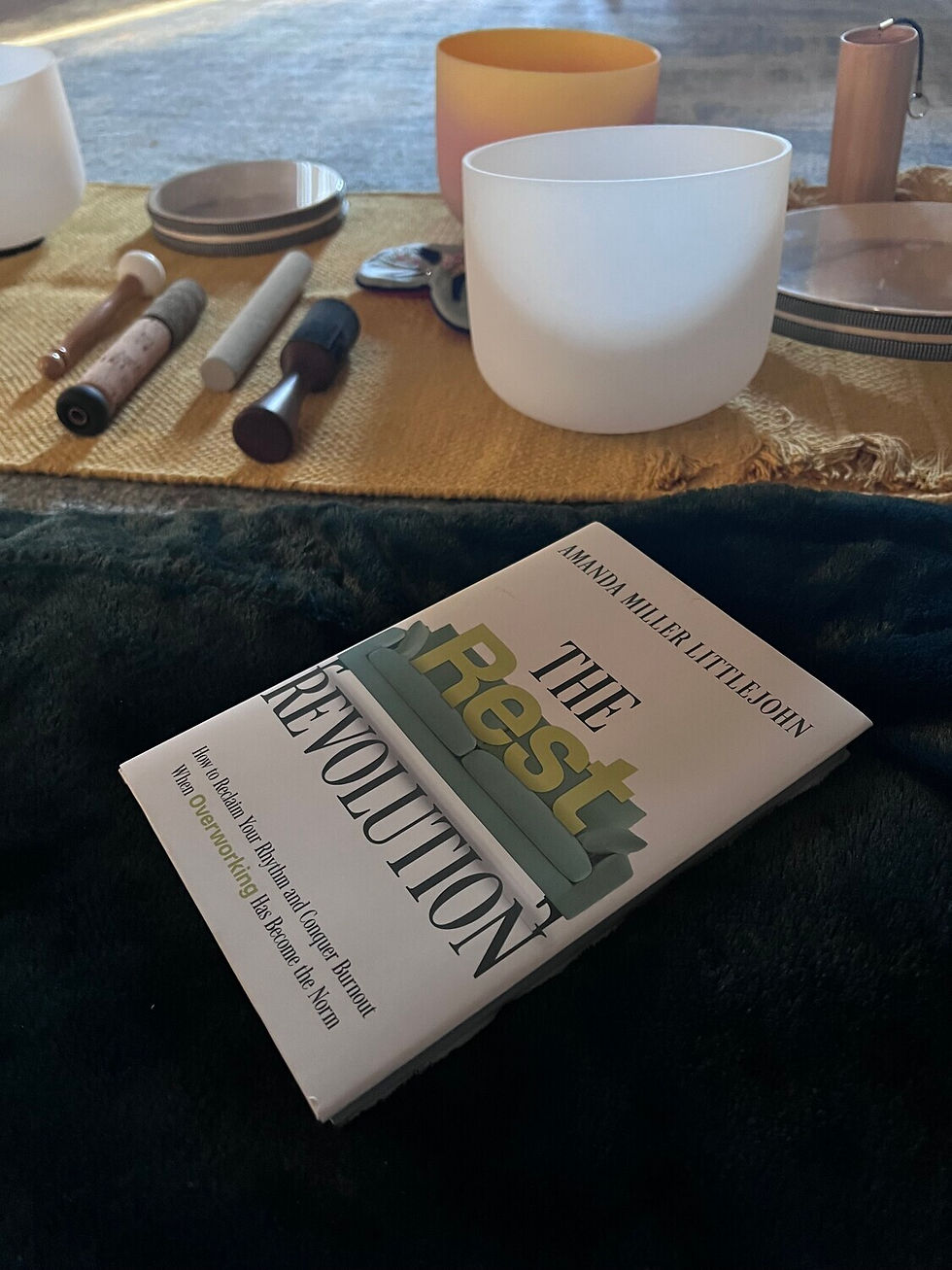
From The Rest Revolution, Chapter 12 - Restore and Realign Space:
I discovered singing bowls when a friend introduced me to them in her home. I thought the bowls were interesting and made a fun sound, so I ordered my own set and let my kids "play them" off and on. This wasn’t with any real intention and I didn't integrate sound baths into my life with any regularity, but when I heard a podcast interview with Sara Auster, a sound therapist, about the power of sound bathing on one of my favorite podcasts, I was intrigued to give regular sound baths a try.
I started adding Auster's 20-minute sound baths into my morning routine before I journaled. The sound created a stillness I could hold on to for a bit longer. I found listening to sound baths a way to meditate without meditating, if you will. I could focus on the sounds I was hearing and not worry about clearing my mind completely.
In his neuroscience and psychiatry work, AZA Stephen Allsop, MD, PhD is studying how sound impacts our moods. His hope is to eventually be able to medically prescribe certain sounds in the form of music and playlists for healing. He says that while the science is nascent, there seems to be evidence that sound therapy - whether through music, listening to binaural beats, or a sound bath - can heal.
"I do think that sound baths do help and work, especially when the person facilitating them is experienced," said Dr. Allsop. He admits there hasn't been as much research in the form of randomized controlled trials and the evidence is not as robust. But in his opinion, knowing what we do know about sound and subjective reports of their experience with sound baths, they are a tool that can work for healing.
"It's this idea of using very specific frequencies and tonalities within a certain context to help people find a deeper state of relaxation, which activates the parasympathetic nervous system, which in and of itself is the body's own natural mechanism for resting, recharging and healing," he told me.
Sound baths are one of the most accessible and powerful stillness practices I’ve found.
They don’t ask anything of you except to receive.
📧 Join my sound bath updates email list so I can let you know when I host a session - https://package-your-genius-academy.kit.com/a6fa4b5054
Interested in booking a Soundbath? Contact Logan at info@therestrevolutionbook.com


Comments